Archive for the ‘Uncategorized’ Category

Cashing in on Counter-Terrorism

Posted: August 15, 2015 by gamegetterII in Uncategorized

The counter-terrorism industry in the United States is largely invisible, but its cost is not, amounting to tens or even hundreds of billions of dollars annually, depending on what one includes in the reckoning. And the actual level of threat is certainly debatable. Anyone who looks at terrorism arrests and convictions in the United State would likely come to the conclusion that many of the cases that eventually go to court are borderline entrapment. A suspect is frequently first identified by way of the internet or through telephone taps, either based on radical sites visited or by connections to friends who are themselves under suspicion. A case against the individual is then developed by monitoring what he or she is saying and writing, followed by the frequent introduction of a confidential Federal Bureau of Investigation (FBI) informant who contrives to become a friend.

At that point the whole process becomes murky because the informant is not supposed to encourage the suspect to undertake an illegal act, which would be entrapment. Nevertheless, in many cases the suspect proceeds to commit himself more and more after the informant is introduced and in many cases the latter then provides a bomb that will not explode or a gun that will not shoot. An arrest, trial, and conviction follow, demonstrating once again that the government is doing its job against terror.

Part of the trial process is the expert witness, used by both the defense and prosecution. An expert witness is supposed to be objective but in reality he is an advocate for the viewpoint of whoever is paying for his services, though if he goes too far he is vulnerable to aggressive cross examination by the opposing side.

Read the whole thing Here

Facial recognition and biometric databases have been a reality in technology for decades, and have been used overseas by the military to assist in occupying potentially hostile populations in places like Iraq and Afghanistan.

Populations there not only face the possibility of becoming a statical civilian casualty, but are processed and tagged like cattle as well.

Now, that paradigm is coming home to roost – as spy agencies like the NSA have long planned.

Biometrics are designed for use in mass populations here in America and throughout the Western world, not just war torn locales. According to the NY Times:

Facial recognition software, which American military and intelligence agencies used for years in Iraq and Afghanistan to identify potential terrorists, is being eagerly adopted by dozens of police departments around the country to pursue drug dealers, prostitutes and other conventional criminal suspects. But because it is being used with few guidelines and with little oversight or public disclosure, it is raising questions of privacy and concerns about potential misuse.

The potential for abuse is obvious.

Already, the database is saddled by millions of people who are not criminals and have not been charged with any crime – which experts claim is reducing its effectiveness. There is about a 20% rate of false-positives – hardly encouraging:

“It is not as if there is the identification of a specific crime problem; they are simply collecting a lot of information that could impact a lot of completely innocent people,” said Michael German, a fellow at the Brennan Center for Justice and a former F.B.I. agent.

The New York Times interviewed two people upset about police detaining them on street curbs to take a photo for the biometric database, while also taking such data as cheek-swabbed DNA.

They weren’t arrested, but now they are being watched more closely than people realize, as increasing numbers of cameras and computer systems are beginning to utilize law enforcement biometric databases, potentially recognizing and flagging innocent people everywhere they go, and subjecting them to possible undue suspicion.

One case was a retired firefighter who encountered police after he attempted to stop an intruder at his home:

Read it all Here

WASHINGTON — In what experts say is the first acknowledgment of how the United States Postal Service’s mail surveillance program for national security investigations is used, the service’s internal watchdog found that inspectors failed to follow key safeguards in the gathering and handling of classified information.

The overall program, called mail covers, allows postal employees working on behalf of law enforcement agencies to record names, return addresses and other information from the outside of letters and packages before they are delivered to the home of a person suspected of criminal activity.

The information about national security mail covers, amid heated public debate over the proper limits on government surveillance, was contained in an audit conducted by the Postal Service’s inspector general last year. Although much of the information was public, sections about the national security mail covers were heavily redacted. An unredacted copy of the report was provided to a security researcher in response to a Freedom of Information Act request this year. The researcher, who goes by a single legal name, Sai, shared the report with The New York Times.

In a June 8 letter to Sai, the Postal Inspection Service — the Postal Service’s law enforcement arm — said it could not “confirm or deny the existence” of the national security mail cover program, even though it was mentioned in the audit.

“The Postal Service does not provide public comment on matters which could potentially involve national security interests,” Paul J. Krenn, a spokesman, said in an email. The Postal Inspection Service did tell the auditors that it had begun training its employees on handling classified materials.

Experts said the unredacted report was the first to provide public details, although minimal, about the national security mail covers. The number of requests appeared small, about 1,000 from 2011 to 2013, and the report did not say which federal agencies made them.

It did disclose that the F.B.I., the Internal Revenue Service, the Drug Enforcement Administration and the Department of Homeland Security were the largest overall users of mail covers. Those agencies declined to provide The Times with data on their use of mail covers in response to a Freedom of Information Act request filed last year.

The redacted audit was posted in May 2014 on the website of the Postal Service’s Office of Inspector General, even though Postal Service managers said the report should be exempt from public disclosure because it could compromise investigations. The inspector general disagreed.

Kevin R. Kosar, a former analyst at the Congressional Research Service who worked on postal issues, said he found it surprising that the Office of Inspector General redacted the information about the national security mail covers in the first place.

“I think it’s symptomatic of our overclassification of information in the government,” he said. “There is nothing here that compromises any law enforcement activities. In fact, there is very little information.”

Privacy advocates said the findings about the national security mail covers were hardly surprising given that the public report last year found that the Postal Inspection Service had failed to provide adequate oversight.

In addition to raising privacy concerns, the audit questioned the Postal Service’s efficiency and accuracy in handling mail cover requests. Many requests were processed late, the audit said, which delayed surveillance, and computer errors caused the same tracking number to be assigned to different requests.

“I think they should have to get warrants to get this information,” said Frank Askin, a law professor at the Rutgers Constitutional Rights Clinic who, as a lawyer for the American Civil Liberties Union, successfully sued the F.B.I. nearly 40 years ago after the agency monitored the mail of a 15-year-old New Jersey student. “Law enforcement agencies shouldn’t just be able to go to the Postal Service and ask them to track someone’s communications. It raises serious First Amendment issues.”

The inspector general also found that the Postal Inspection Service did not have “sufficient controls” in place to ensure that its employees followed the agency’s policies in handling the national security mail covers.

According to the audit, about 10 percent of requests did not include the dates for the period covered by surveillance. Without the dates in the files, auditors were unable to determine if the Postal Service had followed procedures for allowing law enforcement agencies to monitor mail for a specific period of time.

Additionally, 15 percent of the inspectors who handled the mail covers did not have the proper nondisclosure agreements on file for handling classified materials, records that must be maintained for 50 years. The agreements would prohibit the postal workers from discussing classified information.

And the inspector general found that in about 32 percent of cases, postal inspectors did not include, as required, the date on which they visited facilities where mail covers were being processed. In another 32 percent of cases, law enforcement agencies did not return documents to the Postal Inspection Service’s Office of Counsel, which handles the national security mail covers, within the prescribed 60 days after a case was closed.

The mail covers program is more than a century old, but law enforcement officials consider it a powerful investigative tool. They say that the program’s deceptively old-fashioned method of collecting data provides a wealth of information about the businesses and associates of its targets, and that it can lead to bank and property records and even to accomplices. Opening mail requires a warrant.

The Times reported last year that there had been abuses of the mail cover surveillance program. Interviews and court records showed that the program had been used by a county attorney and sheriff in Arizona to investigate a political opponent and to monitor privileged communications between lawyers and their clients, a practice not allowed under postal regulations. The county attorney was later disbarred, in part because of the investigation.

“Insufficient controls could hinder the Postal Inspection Service’s ability to conduct effective investigations, lead to public concerns over privacy of mail and harm the Postal Service’s brand,” the audit concluded.

source

The Ultimate Sniper (Book Review)

Posted: August 15, 2015 by gamegetterII in Uncategorized

jlm990's avatarAzweaponcraftprepper

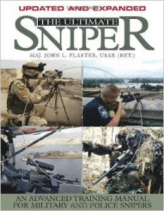
Ultimate SniperIn a serious SHTF situation, you may be called on to defend yourself with your rifle. If you only have one manual for reference and training on rifle marksmanship, this one should be it.

Continue Reading

View original post

Clendennen, Broden Gagged Again

Posted: August 15, 2015 by gamegetterII in Uncategorized

Via The Aging Rebel

All you really need to know about the repulsive corruptness of the official investigation into the Twin Peaks Massacre case in Waco is that Scimitars Motorcycle Club patch holder Matt Clendennen will not be able to speak a public word in his own defense for at least another month. Neither will his lawyer Clint Broden. A month will be the soonest either can speak. It is likely to be longer than that

A week ago, an appeals court ordered the judge who gagged Clendennen and Broden, Judge Matt Johnson, to vacate his order by today. McLennan County District Attorney Abelino “Abel” Reyna, who is Johnson’s former law partner and who dreamed up the gag order as a way to intimidate defense attorneys in the case, appealed the ruling this week. Reyna explained that Clendennen has to forfeit his constitutional rights in order to keep them.

The lying son of a bitch wrote:

“In its conditional grant of Clendennen’s Writ of Mandamus, the Tenth Court of Appeals set a deadline of August 14, 2015 for the trial court to vacate its gag order. Given the paramount importance to the trial rights of Mr. Clendennen and those similarly situated, guaranteed by the Fifth and Sixth Amendments and Article 1, section 10 of the Texas Constitution; the trial court’s affirmative constitutional duty to minimize the effects of prejudicial pretrial publicity enunciated in Gannett; and the seeming divergence of opinion between the Tenth and Fourteen Courts of Appeal, this Court should stay the conditional Writ of Mandamus issued by the Tenth Court of Appeals issued in this case on August 7, 2015, or grant such other emergency relief as requested in this petition.”

Judges Say

Yesterday the Texas Court of Criminal Appeals sided with Reyna. In a terse, two page order the learned judges wrote:

“This Court has determined that this case should be filed and set and the parties should brief the following issues:

“Is the Texas Supreme Court’s holding in Davenport v. Garcia, 834 S.W.2d (Tex. 1992), applicable to gag orders in criminal cases?

“Are the findings supporting the gag order in this case sufficiently specific?

“Is Tenth Court of Appeals’ conditional grant of mandamus relief supported by the law and facts of this case?

“Briefs from relator, respondent, and the real party in interest are due in this Court within 30 days of the date of this order. No motions for extension of time to file will be entertained.”

Read the rest  Here

Reading The Autopsies Again

Posted: August 15, 2015 by gamegetterII in Uncategorized

Via The Aging Rebel

The autopsy reports for the nine men killed in the Twin Peaks Massacre in Waco on May 17 are a thicket of words that don’t seem to answer many questions. The reports may be as important for what they don’t disprove as for what they do or don’t prove. They do not for example, disprove the notion that all, or at least most of the dead men were killed by police using M-16s and FN P90 machine guns.

Thirteen of sixteen entrance wounds were .25 inches in diameter or smaller.

FN P90s fire a round with a diameter of .224409 inches. M-16s fire slightly smaller rounds with diameters of 0.218898 inches. All but one of the victims had wounds fired from a downward trajectory. Six of the nine dead had head or neck wounds. None of the wounds contained gunshot residue which indicates that the shots were fired from at least three feet away and probably five feet or farther away. The absence of residue casts doubt on claims by prosecutors of  “Bandidos executing Cossacks, and Cossacks executing Bandidos.” Two of the dead had large wounds consistent with a 12 gauge shotgun slug. Ten of 16 wounds were in the back, indicating that the victims were running away when they died. Seven of the wounds were fired from right to left. Six were fired from left to right.

Nine millimeter bullets have a diameter of 0.35433 inches; forty caliber handguns fire a bullet that is four tenths of an inch in diameter and 357 magnums fire rounds that are about .357 inches in diameter.

Read the whole thing Here

Freedom And Central Planning Can Never Coexist

Posted: August 15, 2015 by gamegetterII in Uncategorized

Via NC Renegade

The average person is a statist, whether he realizes it or not. It is important that liberty activists recognize and accept this fact because the truth of our limitations as a movement determines the kinds of solutions into which we should ultimately put our time and energy. The fantasy of a final grand march of an awake and aware majority on the doorsteps of power is just that: a fantasy. Some people might argue that given more time, such an event could be organized or could happen spontaneously. But these people seem to forget that the immediacy of any crisis inspires awareness and cuts the bindings of complacency for only a certain percentage of any given population. With “more time” often comes more complacency, not less.

So, history becomes a kind of balancing act, with crisis generating the necessity of intelligent and moral action in some people but rarely, if ever, in most people (even during the American Revolution, in which patriots represented a stark minority). The reason that the culture of freedom consistently plateaus and remains stuck at underdog status is because human beings are, first, often acclimated to the idea that crises are things that only happen to other people, and, second, they are obsessed with the idea that governments should retain prohibitory and administrative power over the public as a means to “prevent” crisis from occurring (the sheepdog and sheep mentality).

Read the whole thing Here

Bad Ass of the Week: Josef Pilsudski

Posted: August 15, 2015 by gamegetterII in Uncategorized

By William N. Grigg

Three members of a border vigilante group that offered to assist the Border Patrol have been indicted for practicing “asset forfeiture” without a license – that is, plotting to steal narcotics and cash from drug cartels in Mexico.

A criminal complaint filed by FBI Special Agent John E. Kelly accuses Parris Frazier, Robert Deatherage, and Erik Foster of conspiring to possess and distribute “five kilograms or more of a mixture … containing a detectable amount of cocaine” and derivatives of that controlled substance. The suspects, who belong to a private militia called the “Arizona Special Operations Group,” obtained the contraband from an undercover FBI agent as part of a federal false-flag operation.

On January 24, Frazier was stopped by Border Patrol agents operating an internal checkpoint. Explaining that he “wanted to assist Border Patrol in stopping illegal border activities,” Frazier “asked for information on the illegal activities they had seen lately,” narrates Kelly’s criminal complaint. The agents claimed that they had been working with an informal source but could no longer do so. Frazier “expressed his interest in contacting the source” in order to conduct his own investigation.

11880163_10153515536501240_411006777_nSeveral weeks later, the undercover FBI agent, “posing as the informal [Border Patrol] source,” contacted Frazier. During a covertly recorded conversation, Frazier allegedly told the provocateur that “he had a small group of patriots that he trusted and they were trying to take care of (steal) anything that came up out of Mexico (drugs) or was going back into Mexico (bulk cash),” and that, predictably, “they preferred the cash loads going south.” Frazier promised the undercover FBI agent “a percentage of whatever is taken” from the narco-couriers.

During a second recorded conversation on March 4, Frazier reportedly told the FBI agent that he and his colleagues would be willing to “dispatch” – that is, kill – “all of the individuals guarding the cash to ensure that his guys go home at night.” Although he had specified that none of his associates were “tied up in law enforcement,” their policy regarding lethal force apparently was modeled on the familiar “officer safety uber alles” paradigm.

In recorded phone calls over the next several weeks, the FBI agent outlined a plan to steal thousands of dollars from a vehicle that was supposedly owned by a cousin in the employ of a drug trafficker. This led to an attempted “rip” by Frazier and a partner on April 2: FBI surveillance captured the suspects, dressed in camouflage, wearing facemasks, and carrying AR-15s, search the Bureau’s “bait car” in a fruitless effort to steal money that wasn’t there.

A follow-up phone call from the informant added new details to the fabricated story by claiming that cartel members had found $8,000 in the vehicle, but that the miscreant cousin had stolen $12,000. Unwittingly playing the role scripted for him, Frazier allegedly told the informant: “How about I lay an offer out on the table that we just get him [the cousin] out of the way for you.” The informant suggested that Frazier and his partners do at last one more cash “rip” before discussing a hit on the mythical cousin.

11855441_10153515530216240_641655080_nOn April 23, Frazier and his companion seized $7300 from a second FBI “bait car” that was said to be carrying $20,000. Once again, the informant claimed that the cousin had confiscated the rest while driving the “cartel vehicle” to a pre-designated drop.Artfully stringing Frazier along, the informant continued to discuss the possibility of a murder-for-hire targeting the nonexistent cousin. In the meantime, he told Frazier, it would be possible for him to steal a northbound cocaine shipment. Frazier and the other two suspects were directed to a warehouse in Phoenix where they found a Hyundai Tucson containing “one package of actual cocaine weighing approximately one kilogram and nine packages of cocaine stimulant [sic] that also weighed approximately one kilogram each.”(Emphasis added.)
Read more at http://thefreethoughtproject.com/false-flags-unauthorized-asset-forfeiture/#pPICfV7XXiz1ji6p.99

The 3% of Idaho

Posted: August 14, 2015 by gamegetterII in Uncategorized