Archive for the ‘Uncategorized’ Category

Black3Actual's avatarTHE ROAD TO CONCORD

The ‘Supreme Court’ has refused to hear another 2nd Amendment case.  In reality, what they are doing is destroying the 2nd Amendment.  They think they can keep their hands clean by allowing lower courts to destroy it and then just refusing to hear any appeals based on those lower rulings.  In their perverted minds, this allows them to say they didn’t destroy the 2nd Amendment, but they have.  Not to act is to act.  But they have done something much worse; something their depraved narcissism prevents them from seeing.  They have destroyed the Supreme Court in the process.  The Supreme Court has one and only one purpose: to defend the Constitution,  Once the Justices refuse to do so, they have nullified their entire purpose for being.  But I want to make my case very clear, so let’s illustrate my argument by applying the Court’s tactic to cell phones and see…

View original post 1,392 more words

National Constitution Center

On June 8, 1789, James Madison addressed the House of Representatives and introduced a proposed Bill of Rights to the Constitution. More than three months later, Congress would finally agree on a final list of Rights to present to the states.

James_Madisonnew640

Some of Madison’s opening list of amendments didn’t make the final cut in September. The House agreed on a version of the Bill of Rights that had 17 amendments, and later, the Senate consolidated the list to 12 amendments. In the end, the states approved 10 of the 12 amendments in December 1791.

One of two amendments rejected by the states was eventually ratified in 1992 as the 27th Amendment; it restricted the ability of Congress to change its pay while in session. (The other proposed amendment dealt with the number of representatives in Congress, based on the 1789 population.)

But if Madison had his original way, our Constitution would have a two-part Preamble that includes part of Thomas Jefferson’s Declaration of Independence before the current preamble.

On June 8, 1789, Madison told Congress the Preamble needed a “pre-Preamble.”

“First. That there be prefixed to the Constitution a declaration, that all power is originally vested in, and consequently derived from, the people. That Government is instituted and ought to be exercised for the benefit of the people; which consists in the enjoyment of life and liberty, with the right of acquiring and using property, and generally of pursuing and obtaining happiness and safety. That the people have an indubitable, unalienable, and indefeasible right to reform or change their Government, whenever it be found adverse or inadequate to the purposes of its institution.”

In essence, Madison wanted to bury arguably the most famous sentence in American history, “We the People,” in the middle of a combined Preamble.

Roger Sherman of Connecticut was among the first to question the move to downplay “We the People.”

“The truth is better asserted than it can be by any words what so ever. The words ‘We the People’ in the original Constitution are as copious and expressive as possible,” he said. And in time, Congress deleted the entire “pre-Preamble” as the Bill of Rights went through committees.

Another item that Madison proposed was making sure at least three of the liberties guaranteed in the Bill of Rights applied to all states. “No State shall violate the equal rights of conscience, or the freedom of the press, or the trial by jury in criminal cases,” Madison said in the fifth part of his original Bill of Rights proposal. The selective incorporation of parts of the Bill of Rights to the states didn’t happen until the early part of the 20th century as the Supreme Court interpreted the 14th Amendment in a series of cases.

Madison also wanted to clearly spell out that each branch of government had clear, distinct roles.

“The powers delegated by this Constitution are appropriated to the departments to which they are respectively distributed: so that the Legislative Department shall never exercise the powers vested in the Executive or Judicial, nor the Executive exercise the powers vested in the Legislative or Judicial, nor the Judicial exercise the powers vested in the Legislative or Executive Departments,” he said in the last part of his proposed Bill of Rights.

Neither of these items made it through the congressional review process. But Madison felt strongly enough about the separation of powers clause that he wanted it as the new Article VII in the Constitution.

And the second part of the new “Article VII” did survive in the Bill of Rights. It read, “The powers not delegated by this Constitution, nor prohibited by it to the States, are reserved to the States respectively.”

Another interesting twist in Madison’s proposed Bill of Rights was a different version of what became the Second Amendment.

“The right of the people to keep and bear arms shall not be infringed; a well armed and well regulated militia being the best security of a free country: but no person religiously scrupulous of bearing arms shall be compelled to render military service in person,” said Madison.

And the final, big difference that Madison wanted was the entire Bill of Rights interwoven within the Constitution, and not appended at the document’s end.

That idea didn’t pass muster with Congress because there were concerns of an appearance that the Constitution was being rewritten. Madison dropped his support of “interweaving” the amendments during the House debate about moving his already amended Bill of Rights to the Senate. In the end, many core ideas introduced by Madison in June 1789 made it into the ratified version of the Bill of Rights.

“I think we should obtain the confidence of our fellow citizens, in proportion as we fortify the rights of the people against the encroachments of the government,” Madison said in his address to Congress in June 1789.

Government-Granted Freedom, by Pater Tenebrarum

Posted: June 8, 2015 by gamegetterII in Uncategorized

Robert Gore's avatarSTRAIGHT LINE LOGIC

The war on terrorism has always been a trojan horse for the growth of government and its powers, at the expense of its citizens’ liberties. From Pater Tenebrarum, at acting-man.com:

Orwellian Language – the Slide toward “Velvet Glove” Fascism Continues

Sometimes we get the feeling the ruling elites are investing the laws they enact with a kind of impertinent, slap-in-your-face black humor. How else to explain the Orwellian names given to the liberty-crushing laws that have been put in place since the “war on terror” started?

The latest example is the misnamed “Freedom Act”, the purpose of which appears to be to make legal what was hitherto plainly illegal – inter alia whole-sale spying by the government on the citizenry. The legislation has been sold to the serfs as absolutely necessary to “prevent terror attacks”. As we have previously pointed out, the average US citizen is statistically far more likely…

View original post 55 more words

Misguided fools and RT

Posted: June 8, 2015 by gamegetterII in Uncategorized

Sunday Images …..

Posted: June 7, 2015 by gamegetterII in Uncategorized

Bespoke Science…Made-to-Order Science

Posted: June 7, 2015 by gamegetterII in Uncategorized

School is No Longer Conducive to Human Biology

Posted: June 7, 2015 by gamegetterII in Uncategorized

MaddMedic's avatarFreedom Is Just Another Word...

7 Anti-gun Myths That Need To Be Debunked Immediately | 2nd Amendment Fight.

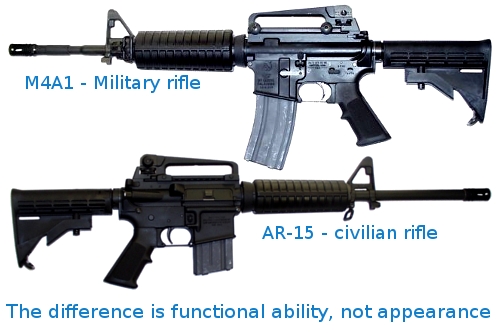
1. “Assault Weapons”

2. “High Capacity Magazines”

3. Gun Show “Loophole”

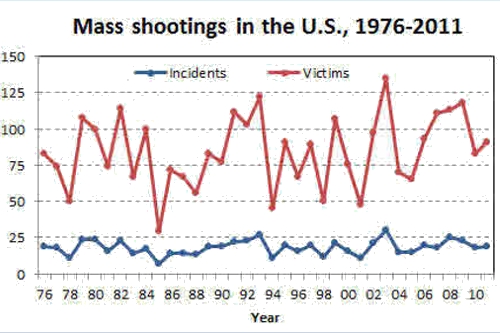
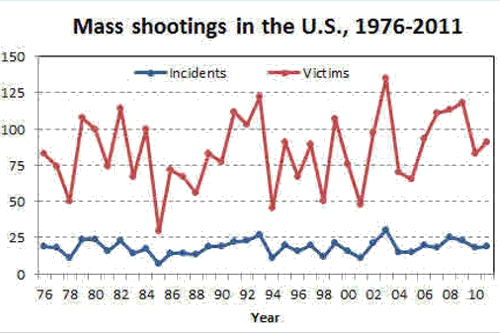
4. Mass Shootings Are Not Increasing:

5. Anti-Gun Organizations Lump in Suicide & Injuries With Crime Data:

6. Too Many Are Being Killed:

7. False Zero-Sum Dichotomy – “Either/Or”:

BONUS: We Need More Laws:

View original post

United States Announces World Police Force

Posted: June 6, 2015 by gamegetterII in Uncategorized

h/t NC Renegade

https://i0.wp.com/www.dcclothesline.com/wp-content/uploads/2015/06/IMG_4020.jpg

The revolutionary development of modern weapons within a world divided by serious ideological differences has produced a crisis in human history. In order to overcome the danger of nuclear war now confronting mankind, the United States has introduced at the Sixteenth General Assembly of the United Nations a Program for General and Complete Disarmament in a Peaceful World.

This new program provides for the progressive reduction of the war-making capabilities of nations and the simultaneous strengthening of international institutions to settle disputes and maintain the peace. It sets forth a series of comprehensive measures which can and should be taken in order to bring about a world in which there will be freedom from war and security for all states. It is based on three principles deemed essential to the achievement of practical progress in the disarmament field:

First, there must be immediate disarmament action:

A strenuous and uninterrupted effort must be made toward the goal of general and complete disarmament; at the same time, it is important that specific measures be put into effect as soon as possible.

Second, all disarmament obligations must be subject to effective international controls:

The control organization must have the manpower, facilities, and effectiveness to assure that limitations or reductions take place as agreed. It must also be able to certify to all states that retained forces and armaments do not exceed those permitted at any stage of the disarmament process.

Third, adequate peace-keeping machinery must be established:

There is an inseparable relationship between the scaling down of national armaments on the one hand and the building up of international peace-keeping machinery and institutions on the other. Nations are unlikely to shed their means of self-protection in the absence of alternative ways to safeguard their legitimate interests. This can only be achieved through the progressive strengthening of international institutions under the United Nations and by creating a United Nations Peace Force to enforce the peace as the disarmament process proceeds.

There follows a summary of the principal provisions of the United States Program for General and Complete Disarmament in a Peaceful World. The full text of the program is contained in an appendix to this pamphlet.

SUMMARY

DISARMAMENT GOAL AND OBJECTIVES

The over-all goal of the United States is a free, secure, and peaceful world of independent states adhering to common standards of justice and international conduct and subjecting the use of force to the rule of law; a world which has achieved general and complete disarmament under effective international control; and a world in which adjustment to change takes place in accordance with the principles of the United Nations.
In order to make possible the achievement of that goal, the program sets forth the following specific objectives toward which nations should direct their efforts:

  • The disbanding of all national armed forces and the prohibition of their reestablishment in any form whatsoever other than those required to preserve internal order and for contributions to a United Nations Peace Force;
  • The elimination from national arsenals of all armaments, including all weapons of mass destruction and the means for their delivery, other than those required for a United Nations Peace Force and for maintaining internal order;
  • The institution of effective means for the enforcement of international agreements, for the settlement of disputes, and for the maintenance of peace in accordance with the principles of the United Nations;
  • The establishment and effective operation of an International Disarmament Organization within the framework of the United Nations to ensure compliance at all times with all disarmament obligations.

Read the rest @ http://www.dcclothesline.com/2015/06/04/united-states-announces-world-police-force/