


![IMG_0342[1]](https://i0.wp.com/starvinlarry.com/wp-content/uploads/2014/12/img_03421.jpg?w=325&h=243&ssl=1 "IMG_0342[1]")


The recurrent problem of green scares that don’t live up to the hype
Posted: August 18, 2015 by gamegetterII in UncategorizedGoV: To Chaos and Beyond — Faye, on Fate and Futurism
Posted: August 17, 2015 by gamegetterII in Uncategorized
More on Facial Recognition Technology-From 2003 !
Posted: August 16, 2015 by gamegetterII in Uncategorizedh/t Grandtrines
Given a digital image of a person’s face, face recognition software matches it against a database of other images. If any of the stored images matches closely enough, the system reports the sighting to its owner. Research on automatic face recognition has been around for decades, but accelerated in the 1990s. Now it is becoming practical, and face recognition systems are being deployed on a large scale.
Some applications of automatic face recognition systems are relatively unobjectionable. Many facilities have good reasons to authenticate everyone who walks in the door, for example to regulate access to weapons, money, criminal evidence, nuclear materials, or biohazards. When a citizen has been arrested for probable cause, it is reasonable for the police to use automatic face recognition to match a mug shot of the individual against a database of mug shots of people who have been arrested previously. These uses of the technology should be publicly justified, and audits should ensure that the technology is being used only for proper purposes.
Face recognition systems in public places, however, are a matter for serious concern. The issue recently came to broad public attention when it emerged that fans attending the Super Bowl had unknowingly been matched against a database of alleged criminals, and when the city of Tampa deployed a face-recognition system in the nightlife district of Ybor City. But current and proposed uses of face recognition are much more widespread, as the resources at the end of this article demonstrate in detail. The time to consider the acceptability of face recognition in public places is now, before the practice becomes entrenched and people start getting hurt.
Nor is the problem limited to the scattered cases that have been reported thus far. As the underlying information and communication technologies (digital cameras, image databases, processing power, and data communications) become radically cheaper over the next two decades, face recognition will become dramatically cheaper as well, even without assuming major advances in technologies such as image processing that are specific to recognizing faces. Legal constraints on the practice in the United States are minimal. (In Europe the data protection laws will apply, providing at least some basic rights of notice and correction.) Databases of identified facial images already exist in large numbers (driver’s license and employee ID records, for example), and new facial-image databases will not be hard to construct, with or without the knowledge or consent of the people whose faces are captured. (The images need to be captured under controlled conditions, but most citizens enter controlled, video-monitored spaces such as shops and offices on a regular basis.) It is nearly certain, therefore, that automatic face recognition will grow explosively and become pervasive unless action is taken now.
I believe that automatic face recognition in public places, including commercial spaces such as shopping malls that are open to the public, should be outlawed. The dangers outweigh the benefits. The necessary laws will not be passed, however, without overwhelming pressure of public opinion and organizing. To that end, this article presents the arguments against automatic face recognition in public places, followed by responses to the most common arguments in favor.
Obama: The Clear and Present Danger To America
Posted: August 15, 2015 by gamegetterII in Uncategorized
I wasn’t going to write anything today but I’ve had a couple of things on my mind I figured I’d write them here for what they’re worth.
Trying to put these thoughts down is proving somewhat difficult. Let’s see, I’m ‘troubled’ with the lack of urgency within folks like Obama. That’s not really how I wanted to say it. Let me try this … I’m sickened by the fraud who squats in the White House, playing president, who couldn’t care less about the American people. I’m sickened knowing Barack Obama is the ‘clear and present danger’ to the United States. I’m sickened knowing he has propped-up ISIS, armed them, and grants them safe passage to commit the most barbaric crimes against humanity imaginable. Personally I don’t give a rat’s ass about what the Muslim people do to each other in their own countries. I don’t give a damn if they…
View original post 801 more words
The counter-terrorism industry in the United States is largely invisible, but its cost is not, amounting to tens or even hundreds of billions of dollars annually, depending on what one includes in the reckoning. And the actual level of threat is certainly debatable. Anyone who looks at terrorism arrests and convictions in the United State would likely come to the conclusion that many of the cases that eventually go to court are borderline entrapment. A suspect is frequently first identified by way of the internet or through telephone taps, either based on radical sites visited or by connections to friends who are themselves under suspicion. A case against the individual is then developed by monitoring what he or she is saying and writing, followed by the frequent introduction of a confidential Federal Bureau of Investigation (FBI) informant who contrives to become a friend.
At that point the whole process becomes murky because the informant is not supposed to encourage the suspect to undertake an illegal act, which would be entrapment. Nevertheless, in many cases the suspect proceeds to commit himself more and more after the informant is introduced and in many cases the latter then provides a bomb that will not explode or a gun that will not shoot. An arrest, trial, and conviction follow, demonstrating once again that the government is doing its job against terror.
Part of the trial process is the expert witness, used by both the defense and prosecution. An expert witness is supposed to be objective but in reality he is an advocate for the viewpoint of whoever is paying for his services, though if he goes too far he is vulnerable to aggressive cross examination by the opposing side.
Read the whole thing Here
Police Using Biometrics on Americans… Without Consent in Unaccountable Database
Posted: August 15, 2015 by gamegetterII in UncategorizedFacial recognition and biometric databases have been a reality in technology for decades, and have been used overseas by the military to assist in occupying potentially hostile populations in places like Iraq and Afghanistan.
Populations there not only face the possibility of becoming a statical civilian casualty, but are processed and tagged like cattle as well.
Now, that paradigm is coming home to roost – as spy agencies like the NSA have long planned.
Biometrics are designed for use in mass populations here in America and throughout the Western world, not just war torn locales. According to the NY Times:
Facial recognition software, which American military and intelligence agencies used for years in Iraq and Afghanistan to identify potential terrorists, is being eagerly adopted by dozens of police departments around the country to pursue drug dealers, prostitutes and other conventional criminal suspects. But because it is being used with few guidelines and with little oversight or public disclosure, it is raising questions of privacy and concerns about potential misuse.
The potential for abuse is obvious.
Already, the database is saddled by millions of people who are not criminals and have not been charged with any crime – which experts claim is reducing its effectiveness. There is about a 20% rate of false-positives – hardly encouraging:
“It is not as if there is the identification of a specific crime problem; they are simply collecting a lot of information that could impact a lot of completely innocent people,” said Michael German, a fellow at the Brennan Center for Justice and a former F.B.I. agent.
The New York Times interviewed two people upset about police detaining them on street curbs to take a photo for the biometric database, while also taking such data as cheek-swabbed DNA.
They weren’t arrested, but now they are being watched more closely than people realize, as increasing numbers of cameras and computer systems are beginning to utilize law enforcement biometric databases, potentially recognizing and flagging innocent people everywhere they go, and subjecting them to possible undue suspicion.
One case was a retired firefighter who encountered police after he attempted to stop an intruder at his home:
Read it all Here
Copy of Postal Service Audit Shows Extent of Mail Surveillance
Posted: August 15, 2015 by gamegetterII in UncategorizedWASHINGTON — In what experts say is the first acknowledgment of how the United States Postal Service’s mail surveillance program for national security investigations is used, the service’s internal watchdog found that inspectors failed to follow key safeguards in the gathering and handling of classified information.
The overall program, called mail covers, allows postal employees working on behalf of law enforcement agencies to record names, return addresses and other information from the outside of letters and packages before they are delivered to the home of a person suspected of criminal activity.
The information about national security mail covers, amid heated public debate over the proper limits on government surveillance, was contained in an audit conducted by the Postal Service’s inspector general last year. Although much of the information was public, sections about the national security mail covers were heavily redacted. An unredacted copy of the report was provided to a security researcher in response to a Freedom of Information Act request this year. The researcher, who goes by a single legal name, Sai, shared the report with The New York Times.
In a June 8 letter to Sai, the Postal Inspection Service — the Postal Service’s law enforcement arm — said it could not “confirm or deny the existence” of the national security mail cover program, even though it was mentioned in the audit.
“The Postal Service does not provide public comment on matters which could potentially involve national security interests,” Paul J. Krenn, a spokesman, said in an email. The Postal Inspection Service did tell the auditors that it had begun training its employees on handling classified materials.
Experts said the unredacted report was the first to provide public details, although minimal, about the national security mail covers. The number of requests appeared small, about 1,000 from 2011 to 2013, and the report did not say which federal agencies made them.
It did disclose that the F.B.I., the Internal Revenue Service, the Drug Enforcement Administration and the Department of Homeland Security were the largest overall users of mail covers. Those agencies declined to provide The Times with data on their use of mail covers in response to a Freedom of Information Act request filed last year.
The redacted audit was posted in May 2014 on the website of the Postal Service’s Office of Inspector General, even though Postal Service managers said the report should be exempt from public disclosure because it could compromise investigations. The inspector general disagreed.
Kevin R. Kosar, a former analyst at the Congressional Research Service who worked on postal issues, said he found it surprising that the Office of Inspector General redacted the information about the national security mail covers in the first place.
“I think it’s symptomatic of our overclassification of information in the government,” he said. “There is nothing here that compromises any law enforcement activities. In fact, there is very little information.”
Privacy advocates said the findings about the national security mail covers were hardly surprising given that the public report last year found that the Postal Inspection Service had failed to provide adequate oversight.
In addition to raising privacy concerns, the audit questioned the Postal Service’s efficiency and accuracy in handling mail cover requests. Many requests were processed late, the audit said, which delayed surveillance, and computer errors caused the same tracking number to be assigned to different requests.
“I think they should have to get warrants to get this information,” said Frank Askin, a law professor at the Rutgers Constitutional Rights Clinic who, as a lawyer for the American Civil Liberties Union, successfully sued the F.B.I. nearly 40 years ago after the agency monitored the mail of a 15-year-old New Jersey student. “Law enforcement agencies shouldn’t just be able to go to the Postal Service and ask them to track someone’s communications. It raises serious First Amendment issues.”
The inspector general also found that the Postal Inspection Service did not have “sufficient controls” in place to ensure that its employees followed the agency’s policies in handling the national security mail covers.
According to the audit, about 10 percent of requests did not include the dates for the period covered by surveillance. Without the dates in the files, auditors were unable to determine if the Postal Service had followed procedures for allowing law enforcement agencies to monitor mail for a specific period of time.
Additionally, 15 percent of the inspectors who handled the mail covers did not have the proper nondisclosure agreements on file for handling classified materials, records that must be maintained for 50 years. The agreements would prohibit the postal workers from discussing classified information.
And the inspector general found that in about 32 percent of cases, postal inspectors did not include, as required, the date on which they visited facilities where mail covers were being processed. In another 32 percent of cases, law enforcement agencies did not return documents to the Postal Inspection Service’s Office of Counsel, which handles the national security mail covers, within the prescribed 60 days after a case was closed.
The mail covers program is more than a century old, but law enforcement officials consider it a powerful investigative tool. They say that the program’s deceptively old-fashioned method of collecting data provides a wealth of information about the businesses and associates of its targets, and that it can lead to bank and property records and even to accomplices. Opening mail requires a warrant.
The Times reported last year that there had been abuses of the mail cover surveillance program. Interviews and court records showed that the program had been used by a county attorney and sheriff in Arizona to investigate a political opponent and to monitor privileged communications between lawyers and their clients, a practice not allowed under postal regulations. The county attorney was later disbarred, in part because of the investigation.
“Insufficient controls could hinder the Postal Inspection Service’s ability to conduct effective investigations, lead to public concerns over privacy of mail and harm the Postal Service’s brand,” the audit concluded.

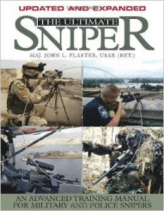 In a serious SHTF situation, you may be called on to defend yourself with your rifle. If you only have one manual for reference and training on rifle marksmanship, this one should be it.

