Archive for the ‘survival’ Category

Those who live where they have the room to grow a large garden should be doing so,as it not only saves you money,it supplies you with a lot of food which you can preserve by freezing,canning,and dehydrating.

Just for an example,we just yesterday finished the last jar of tomato puree that we canned last fall,and last year was a really lousy year for growing tomatoes in NE Ohio.

We still have 6-8 pint jars of what I call chili base-it’s peeled and de-seeded tomatoes and a variety of hot peppers that makes it super easy to make a batch of chili,plus it takes less time,as all the hot peppers are already diced up and in the sauce.

We still have green and yellow wax beans canned from last year,and still have some frozen diced hot peppers,green peppers,and sliced eggplant,along with some shredded zucchini.

Even if you live in the city,in an apartment,you can grow a few tomato plants,and a couple of pepper plants in buckets,or large flower pots on your balcony.

I do the maintenance at a couple of condo complexes,some of the people there have huge zucchini and tomato plants on their small patios.

You can grow herbs like basil,oregano,thyme,and rosemary inside year round,in flower pots near south facing windows. Windows facing other directions will work,you just won’t get as much growth,as fast.

No matter where your garden is-a raised bed garden on a city lot,or a half acre garden,you have to amend to soil-which means adding organic material like composted manure(never put fresh manure on your garden-it will kill your plants)-compost,or peat,along with crushed or powdered lime if your soil contains a lot of clay.

To “loosen up” your soil,you need to add vermiculite or perlite-that’s those little white “rocks” you find in potting soil.

You also will need to fertilize your plants,I use a combination of leaf feeding,which I do with Miracle Grow,mixed at 1 1/2 tablespoons per gallon of water-that I put in a spray bottle,then spray on the plants until the leaves are wet. I do that once per week.

I also use a continuous release fertilizer which I place at the base of the plants after they have been in the ground for at least a month. Use according to directions on the package. I have used Miracle Grow’s continuous release fertilizer,and a couple other brands that are specifically for tomatoes. All of them seem to work about the same.

If you are not using fertilizers,you will have to use a lot of composted manure and compost,and rototill it into the soil both in the fall,and in early spring.

What I do is spread a thick-(4-6″)- layer of composted manure over the garden in the fall,after it’s been tilled,in the spring,I till that in,then add another thin layer-(1 1/2-2 1/2 inches)-along with some peat and vermiculite or perlite. If I’m working with soil that has a lot of clay,I also till some lime into the soil in both spring and fall. Eventually, the lime will break up the clay.

It’s not  good to use stakes made from pressure treated lumber in your garden-as the chemicals will leach into the soil-into your plants-and therefore-into you.

Starting out with canning is not all that great of an investment,water bath canners are around $20.00,you also need a pressure canner to be able to can some veggies-like green beans-plus with a pressure canner you can can soups,sauces,and meats.

You will need a set of jar tongs,a canning funnel,and a supply of Ball canning jars-with rings and lids. Also get some canning salt,and citric acid. Some recipes also call for vinegar and some type of oil.

The jars and rings are reuseable,the lids are not.

Get yourself a copy of the ball Blue Book of Canning-it’s about the best reference on canning out there,you can also get canning info from the USDA,and your county Agricultural office if you live in a rural or semi-rural area.

Go here for canning info from Ball…

http://www.freshpreserving.com

Go here for canning info from USDA…

The free, 196-page publication can be downloaded from the National Center for Home Food Preservation website. The publication is also available in a spiral, bound book format from Purdue University. Single copies are available for $18 per copy, bulk discounted prices are available. Orders can be placed via phone (toll-free: 1-888-398-4636), fax (765-496-1540) or online at  Purdue’s The Education Store.

Those who are hunters can also preserve game by canning.

Having your pantry stocked up with foods that cost you very little-other than your time,is also a great way to be able to save $$$ that can be better spent on important things-like rifles,shotguns,bows,crossbows,ammo,arrows,crossbow bolts,and fishing gear.

Read.

Learn.

Train.

Do more PT!

Those of you new to hunting are going to find out that it’s not like the tee vee shows.

You have to put a lot of effort into it. You are not just going to walk out into the woods,set up a treestand,and shoot a deer-it just don’t work that way.

You ain’t gonna be posting pics of the Pope and Young or Boone and Crockett 37 point buck you killed on farcebook or twitter,or sending pics to all your best buds on your smartphone-that is simply not reality.

You also are simply not gonna be a good enough shot to take a deer unless you target practice-a lot.

You also ain’t gonna get a deer if you are a couch potato-hunting is work-you have to spend time in the woods,you have to scout locations and deer movements way before the hunting season begins.

What you need to do,if you are a slug-(couch potato)-is get off your fat ass and start hiking in the woods you plan to hunt-you will need to work your way up to being able to do so carrying all of the gear you are going to carry when hunting.

This will take you about 6 weeks-unless you have been a slug for many years-then it may take 8,10,or 12 weeks for you to get in shape!

While you are wandering around the woods you will be hunting in-pay attention to the animal trails-it’s not hard to tell which are deer trails-if you don’t know what a deer track looks like-Google it-if you are reading this,it’s kinda obvious that you have internet access -use it.

What you need to figure out while you are wandering around the woods-the slugs will be sucking wind most of the time-so they actually have more time to look at the ground- is where the deer are bedding down,where their source of water is-(deer have to drink water at least twice a day)-where their food source is-and which trails they travel to and from each area.

Once you have that figured out,you need to figure out where to place your treestand or blind.

One of the most important things you have to consider is wind direction.

You always want to be downwind of the direction the deer are traveling.

If you are going to hunt in the mornings-what you have to do is get into the woods,and to your stand or blind before it gets light. You have to do so very quietly. One thing that helps is trail tacks,they reflect the light from your flashlight-which you should use as little as possible,and with a green filter lens-so the light emitted is green. Deer supposedly can not see the green light.

I don’t really trust that 100%-so I try not to use a flashlight at all. Walk the trail you will use to get to your stand as much as possible-at times when the deer are not likely to be in the area-

If you are hunting a location that is along the trail deer use when they start moving in the am-hike to your stand in the early afternoon,after the deer have left their bedding area.

If you are hunting an evening feeding area-hike to your stand in the morning.

Many states allow the use of bait and attractants-many do not-be sure you know the regulations in your state.

A good thing to do in states where it’s legal-is to place mineral blocks within shooting range of your stand/blind-starting in early spring,keep putting new blocks out as the old ones are used up-the minerals help antler growth. The deer also get in the habit of visiting the block at a certain time of day. Placing a block near your morning stand/blind and another near your evening stand/blind increases your chances of getting a deer by a lot.

If your state does not allow the use of bait or attractants-it’s no big deal-find the bedding areas,the water sources,and the food sources. Put your stand/blind downwind of the trail the deer use to go to and from one of these areas.

If you are going to use bait-where legal-place it near where your mineral blocks are located-this gives the deer two reasons to visit the location,and to stick around for a while.

I use some shell corn-(just corn that’s been taken off the cob)-and some cob corn.

The shell corn gives them some easy to eat food,the cob corn makes them work a little to eat the food.

That keeps them in place longer,and increases you chances of getting a shot.

Deer hunting is not that complicated,it just takes some effort-you have to scout out the place you’re gonna hunt,you have to be in shape-you can’t be trying to sneak into your stand/blind at 4:30-5am and be sucking wind after you walked 100 yards-get in shape!

You have to target practice-if you are bowhunting-you need to shoot at least 50-60 arrows a day-every day-at different ranges and angles.

If you are hunting with a shotgun using slugs-the best practice would be shooting clays,then shoot a few boxes of slugs a week or two before the season starts-just to get sighted in.

If you are gonna hunt with a rifle-shoot at least 3 times a week. I know ammo is expensive-you just have to shoot 3 groups of 3,3 times a week.that’s around a box and a half of ammo.

Give up the soft drinks-the coffee at the quickie mart,the fast food lunch-and you’ll be able to afford to shoot.

You have to exercise,you have to hike the woods you will be hunting with all the gear you will take hunting,you have to pay attention to deer movements,and food sources-because the food sources change depending on what is available for food.

When the deer stop eating one food,and go to another source-like when acorns drop-plan to move your stand/blind accordingly.

That’s the way you get a deer when you go deer hunting.

I have also posted some articles on prohillbilly.com


Leave any questions,comments,criticisms, or death threats in the comments section below.

You can also follow me on Facebook at  Starvin Larry

On Twitter @StarvinLarry


Read

Learn

Train

Do More PT!


The .22 rimfire is a great cartridge and caliber,plus it’s fairly quiet compared to a 5.556/.223.

A .22 can feed you if need be,capable of killing squirrels,rabbits,even a feral hog-if you make the right shot.

A .22 can be used as a defensive weapon,not my first choice,but if it’s what you have-by all means use it.

Some of the benefits of a .22 are it’s lighter than an A-R,or your average deer rifle-which means you can carry the rifle and lots more ammo for less weight that an A-R,and a lot less weight than a big game rifle.

While a .22 may not have enough “power” to take a guy out with one shot…what do you think it would do to one of the roving bands of gang-bangers we will surely see in any prolonged SHTF situation?

Empty a mag of .22 at one of these groups,and they will scatter like roaches in a cheap motel when you turn the light on. Many will also have.22 caliber holes in their bodies-which will cause them to bleed profusely,and cry for their mommy’s.

There are situations that call for serious stopping power-like an ’06 or a .300 Win mag,or a .454 Casull handgun, yet the lowly .22 is still a valuable part of any SHTF defensive weapons store ,is capable of providing both food and home/property defense,plus the ammo is cheap-(when you can find it)-as long as you have a plan to shelter in place,or plan to”bug out” to a different safe location-you should seriously consider having a semi-auto .22,or at least a good bolt-action .22.

I would go with a Ruger 10-22,since there are millions in circulation,lots of aftermarket parts are available,and it’s a very reliable rifle.

Do not buy a cheap-“off brand” .22 get something that’s a decent rifle,and built good enough to last.

Read

Learn

Train

Do more PT

StarvinLarry

bleach-water-ratio

“When obtaining water to be purified for drinking, avoid (if possible) water which is cloudy. Perhaps there is another nearby access to the same body of water which may be clear.

If scooping water from a pond, etc., try not to disturb the bottom so as not to disturb and pick up dirt or other debris into your water container.

If the water appears cloudy, filter it before treatment. Use a conventional water filter, or any cloth or such filtering material to catch the floating particles as you pour from one water vessel to another. If the water is very cloudy or has a dirty appearance, let it settle in a container for a time, and then gently pour off or scoop the water near the top which will be clearer.


One best way to purify water for drinking is to boil it for 1 minute.
Once the water has reached a rolling boil, it has become safe to drink.

Note that if the water source had been contaminated with chemicals, boiling it or otherwise treating it will NOT assure that the chemical is removed.

Know your water source as best you can.


Use regular household bleach, which the only active ingredient is ‘sodium hypochlorite’.

For many years, regular bleach contained a concentration of 5.25% – 6%.
Note that newer liquid bleach may contain a concentration of 8% sodium hypochlorite (about a third more than the original bleach formula), but is still okay to use with the same quantities from the chart below, given the relative margin of safety.

Note that bleach will lose its potency over time. Generally, 6 months to a year after its expiration date may result in half strength.”


http://modernsurvivalblog.com/survival-kitchen/bleach-water-ratio-for-drinking-water/

During an extended grid down or collapse of society event,or any other long-term disaster situation that may occur,at some point,you will run low on ammo,or run out of ammo,or have something break in your main battle rifle,or your main hunting rifle.

Those who have a felony record can legally own muzzleloaders in most states,just not the kind like the Thompson center that can be converted to a regular rifle,as the BATFE does not consider a muzzleloader to be a firearm,and no NICS check is required to purchase a muzzleloader.


Having a muzzleloader, and a good supply of Pyrodex or Triple7 will provide you with a weapon when that occurs. Then,there’s the fact that you can hunt with a muzzleloader,and the sound is not going to carry as far as that of a regular rifle.

If you are low on ammo,and hunting for food,the muzzleloader will allow you to conserve ammo.

They can also be used for self and home defense,or in battle-as a last resort,due to the fact that the cloud of smoke is going to give away your position.

There are ways that can be used to your advantage though,but that’s another topic.

Personally, I have several muzzleloaders,and old flintlock,a sidelock,and a newer inline.

The flintlock only requires some powder as the primer for the main charge,the sidelock requires percussion caps,and the inline requires 209 shotshell primers.

The flintlock will work as long as you have powder,you have to use FFFG as the priming charge,as it’s a finer powder than the FFG usually used in muzzleloaders. You can use the FFFG in muzzleloading rifles up to .50 caliber,so you don’t really have to keep both the FFG and the FFFG.

The percussion caps for sidelocks are very small,and come 100 to a package-usually a small tin,they are real light,so not much added weight to carry if your’e on foot.

The 209 shotshell primers are also very light,and come in packages of 100,usually a small cardboard box that has a plastic insert in which the primers are kept in rows.

Pyrodex and Triple7 are sold in 1# plastic bottles. One pound is 7,000 grains,depending on your rifle,and what you are hunting,your powder for each shot will vary from 50-100 grains. You get 70 100 grain charges out of one pound,or 140 50 grain charges.

I use a 90 grain charge for deer hunting in my sidelock,a 100 grains in my inline,and 95 grains in my flintlock-5 in the pan,90 as the main charge,all three have taken deer at 100 yards.

You can also use regular black powder,but I would try to avoid that if at all possible,as it’s very difficult to clean your rifle after use.

For the bullet there is the option of round lead ball and cloth patch,-the least costly,also the least accurate,bullet and plastic sabot-the most accurate,or modern version of the minie ball-which is a conical bullet,some require a felt wad between the bullet and powder charge,some don’t.

The round lead balls are most accurate in flintlocks and sidelocks-the modern inlines have a different twist rate to the rifling.

My sidelock, and flintlock will put 3 round lead balls in about a 5-6 inch circle at 100 yards-more than accurate enough to kill a deer.

Using bullet and sabot-I get the group size down to about 3″

Using my inline,with bullet and sabot-I get 1″ to 1 1/2″ groups at 100 yards.

Rather than paying for 15-20 bullets and sabots,I order boxes of 100 or 200 along with the applicable sabot from Midway USA,examples:

200 lead round nosed bullets,plus sabots, cost me about $50.00, including postage.

100 jacketed hollow points plus sabots costs about the same.

You can find boxes of 100 round lead balls for $15-20.00. (plus postage if you order online)

I will add a box of round lead balls to my order,so I always have several boxes on hand.


MUzzleloaders are not cleaned like your rifles that use cartridges and smokeless powder,they are cleaned using either any of the muzzleloading solvents on the market-or soap and water. I have found that the original Dawn dish soap works the best.The blue stuff,none of the others work as well.


Improper gun cleaning,and lack of proper maintenance is something many people are guilty of.

Every time you fire your weapon,you have to clean it,not when you get time,not when you get around to it,not when you feel like it,not when you have 3 or 4 guns to clean-you have to clean every gun every time you fire it-no exceptions.

Well,being in combat could be an exception-for a day or so.

Guns that are not properly cleaned lose accuracy,they tend to malfunction more,they tend to jam,they tend to have problems extracting rounds,with bolt actions the bolt tends to get hard to cycle,and cartridge casing get difficult to eject,and cartridges can become hard to chamber.

Triggers and some types of safeties can malfunction due to excessive dirt,dust and grime.


*please note-any questions,criticisms,complaints,comments,death threats etc can be posted in comments section at bottom of post*

When you get ready to clean your weapon (s),first be certain it’s/they’re unloaded- use a gun cleaning mat-or a piece of cardboard,or some old newspapers-whatever works for you,disassemble the gun as much as is practical,remove the bolt,the magazine,the forearm on a single or double barreled shotgun, etc. and lay the parts out on the mat.

Start by running a brass bore brush of the proper caliber/gauge down the barrel-always go from breech to muzzle,unless that’s not possible with your weapon.

Next,run a patch that’s been soaked in bore cleaner/powder solvent-Hoppes #9 or similar down the barrel,same way-from breech to muzzle. Let the barrel soak for a few minutes,then use the brass bore brush again,run the brush down the barrel several times.

Next run a clean patch down the barrel,then another,after that,run another patch soaked in solvent down the barrel. Let that soak for a few minutes,then run dry,clean patches down the barrel,using a clean patch each time,until a patch comes out clean.

Last step for the barrel is to run a lightly oiled patch down the barrel.

For the bolt-if you’re cleaning a bolt-action,use some solvent on a brass brush,not a bore brush,a brush with a handle on it-looks sorta like a toothbrush-scrub the bolt face,then wipe the solvent off with a clean cloth. Using a plastic pick,clean out all the dust,dirt,grime from around the extractor,and the rest of the bolts moving parts,and around the firing pin.Then what I do is use some lighter fluid-Zippo type-not charcoal lighter-to clean all the old oil etc. from the entire bolt,especially where the firing pin is located,fill it with lighter fluid,then use a wood dowel to push down on the pin-repeat several times-all the gunk-for lack of a better term- will be flushed out this way.

The lightly oil all the moving parts,wipe the bolt off with an lightly oiled cloth,and that’s it for the bolt.

Next,the trigger assembly needs to be cleaned every few times you clean your weapon-unless you are using it in a very dirty/dusty/sandy area-then it should be cleaned every time.

I use either lighter fluid-or brake parts cleaner,both are great at cutting through old oil,and the gunk it makes as it collects all the dirt and dust that gets into the assembly.

Either squirt the lighter fluid,or spray the brake parts cleaner into the assembly,make sure you get the safety too.

Move the safety through all it’s positions several times,pull the trigger back and let it move forward a few times,then repeat a few times with whichever solvent you are using( brake parts cleaner or lighter fluid-not powder solvent-powder solvent is not good for trigger assemblies,it creates a thick film that attracts dirt).

Lightly oil the assembly,wipe it off with a clean cloth-(you can use the same clean cloth for the whole process)-re-install the bolt,and wipe down all metal parts of your weapon with a lightly oiled cloth-unless your weapon is coated with Cerakote,etc.


Another thing I’ve noticed a lot of guys don’t do is use copper solvents.

If you are shooting FMJ military surplus ammo-it’s a must,even if you shoot mostly hunting ammo-it’s still a must,it just takes a couple hundred more rounds to foul your barrel.

What happens is every time you fire a round,a small amount of copper from the bullet gets deposited on /in your barrel’s lands and grooves the copper builds up over time,and it effects accuracy-more copper = less accurate.

The same thing happens with lead,and with the polymer tips used on many of today’s bullets.

There are multiple products out there that all claim to solve copper fouling.several stand out, a few of them are J-B non imbedding bore cleaning compound, or Birchwood-Casey’s  bore scrubber used in combination with a penetrating oil called Kroil-I use the combination of one or the other of the bore cleaners+ the Kroil on really badly fouled barrels, for regular use,I use Hoppes Benchrest #9.


These products all require some scrubbing with a bore brush,and leaving them in the barrel to soak overnight-be sure to keep your barrels pointing downward,you do not want these products running into your trigger mechanism,or soaking into your stock.


http://ads.midwayusa.com/product/716170/birchwood-casey-bore-scrubber-2-in-1-bore-cleaning-solvent-5-oz-liquid?cm_vc=ProductFinding

http://www.brownells.com/gun-cleaning-chemicals/solvents-degreasers/bore-cleaning-paste/j-b-reg-non-embedding-bore-cleaning-compound-prod1160.aspx

http://www.midwayusa.com/product/1322137203/kano-kroil-penetrating-oil-and-bore-cleaning-solvent


Another bad habit I see is the use of far too much gun oil-the key is to use a very light coat,as oil attracts dirt and dust.

Another problem too much gun oil creates is that in cold temps,it gets thicker,and can gum up parts that are supposed to move freely,and prevent them from moving.

Parts such as your firing pin-as I found out on a late season extremely cold Ohio deer hunt when my first shot was low-saw the snow fly slightly beneath and behind the deers belly-as it had gone under the deer-when I racked the pump on the shotgun,aimed and pulled the trigger for a second shot-all I got was a click-same with the third and final shell-click.

The excess oil in the trigger assembly prevented the firing pin from traveling far enough forward to hit the primer hard enough to detonate it.

After spraying liberally with brake parts cleaner,moving all the moving parts by hand,and pulling the trigger several times after cycling the pump with a spent shotgun shell in which I had placed a pencil eraser in place of the old primer to prevent damage to the firing pin due to having no shell in the chamber.

The shotgun worked fine after that-now I clean the trigger assembly thoroughly before deer season.


Remember that a clean firearm functions as intended,has fewer malfunctions,and is far more accurate than a dirty firearm.

There is sort of an exception to the rule-some rifles just are not accurate until a round has been fired through them,I had an old Winchester model 70 in.270 that was like that-used to keep a box of cheap ammo,and fire a round into the dirt in front of the targets at the range before I started shooting at my targets,did the same the day before deer season started-and left the rifle like that-with the one round having been fired through it- left it like that until the end of hunting season,or I got my deer- whichever came first.

Clean your guns-every time you shoot-no exceptions-other than the examples I gave-every time-no excuses.

A dirty gun can jam or otherwise malfunction at the worst possible moment-see above scenario that took place when deer hunting.

Read.

Learn.

Train.

Do more PT.

gamegetterII bowkodiak bowhorton x bow


Pic on top left is a Hoyt GamegetterII compound bow-old school,made in the mid 80’s or so.

Right pic is a 55# draw Bear Kodiak Magnum recurve bow,made in mid 70’s

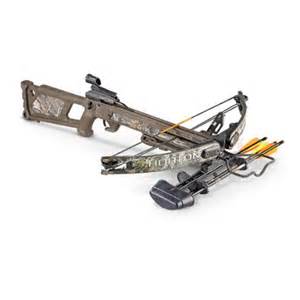
Bottom pic is Horton Summit 150 crossbow-made about 2007 or so-it sucks that Horton went under,at least they were bought by Tenpoint crossbow,another Ohio company.


To get into archery today is expensive-if you buy new bow,quiver,sight/scope,and arrow rest,arrows,etc.

Unless you’ve got a lot of $$$ I would get used stuff,many archery shops sell used bows,pawn shops are another good source,as is the ‘net, and garage sales-if you have the time for that kind of thing.

If you do find a good used bow-of any kind-take it to an archery shop,or a gander Mtn,Bass Pro,Cabela’s etc. and have them put a new string on it for you,put a peep sight in the string,check the bow out to make sure it’s ok mechanically,and check the draw weight if it’s a compound-have them adjust it for you if it’s too easy to draw-or too hard…you’re doing PT every day,so it shouldn’t be too hard to draw,right?

The other thing you need is a target-bales of straw will simply not stop arrows from compound bows,or crossbow bolts.

A black hole,or similar foam target is the best target to use.

The easiest bow to learn to shoot is the crossbow,due to it’s similarity to a rifle. It’s also got the shortest amount of training time to be accurate enough to hunt-or defend yourself and property with.

All you need is the crossbow-bolts-that’s what crossbow arrows are actually called-and some target tips for each bolt. get your target tips in the same weight as your broadheads so when it’s time to shoot the broadheads you won’t have much adjustment to make to your sight/scope.

If you don’t have much arm and upper body strength,you can get a crossbow cocking device,that’s a rope and some pulleys,so it reduces the effort to pull the string back by half.

You shouldn’t need one of these because you ARE doing PT every day,right?

There’s not much maintenance to a crossbow,you’ll need string wax,which you need for any bow-some light machine oil for the cams,and some rail lube,which is generally some type of silicone. The rail is the part where the bolt is placed to load the bow,and where the bolt rides as it’s pushed by the string.

You should be able to hit the target from 10 yards,from there,adjust your pins on your sight,or the windage and elevation on your scope so at 10 yards,your bolts hit about 1 1/2″ high,then move to 20 yards,and using the same pin to aim with,your bolts should hit the bullseye,or very close to it.

I use a rear peep sight on my crossbow,scopes work great,I just prefer the pins,as you can see them for about 10 minutes longer than you can see through a scope in the evening.

Then shoot at 30 yards,using your 2nd pin,which should be placed right under your first pin-if you need your bolts to hit higher,move the pin up,if the need them to hit lower,move the pin down.

Once your are hitting where you should be at 30 yards,adjust your pin so you hit about 1 1/2″ high,then move back and shoot from 40 yards,your arrows should be right on the bullseye.

Put your 3rd pin just below the 2nd one,move back to 50 yards,adjust the pin so you are hitting about 1 1/2″ high.Then move back to 60 yards,and adjust the 3rd pin if you need to.

By sighting in this way-your first pin-the top one,is for shots from 10-20 yards,second pin is for 30-40 yards,and 3rd pin is for 50-60 yards.

Crossbows are accurate well beyond 50 yards,however,I will not shoot a deer beyond 40-50 yards,as there’s just too much chance for error,which could lead to you making a bad shot,and wounding a deer that you are not able to recover.

The compound bow is sighted in pretty much the same way,I only use 3 pins,and I use a peep sight on the string,there are sights available with 5 or even 7 pins,but I feel those are for target shooting only,the 3 pin system is better for hunting,and if need be-self/home defense.

Set your first pin for 10-20,2nd pin from 30-40,and 3rd pin from 40-50.

50 yards is about max hunting range for an older compound,which is what I use,the newer ones can effectively kill deer at 60-70 yards.


Arrows/bolts-when you buy them,don’t get junk. You don’t need top of the line real expensive stuff-get mid price range. The boxes they come in all have charts that tell you what arrow/bolt for what draw weight bow. Get your arrows cut to your draw length-the archery tech will measure your draw length for you-crossbow bolts go by the length that your bow is made for 20″ or 22″.


There are hundreds of different broadheads available for hunting,talk to friends,ask the archery tech,research it online-whatever you want to do-I use 125 grain NAP Thunderheads,they are a 3 blade fixed broadhead,with replaceable blades,and carbide tips-I have never had one not go all the way through a deer,had one go all the way through an elk once too. They work,they have always done the job for me,I see no reason to change.

You will need a broadhead wrench,they are only a few $$$,and it beats slicing the shit out of your fingers putting the broadheads on the arrows with no wrench.


The recurve bow is a whole ‘nother animal,it takes a hell of a lot of practice to become good with one. You can use a peep on the string,and a sight with pins,but many people shoot instinctively,using no sights.

A recurve bow is a good thing to have-for a just in case situation. It is possible to make arrows for a recurve,something that’s just not possible with a crossbow or compound,due to the speeds the bows shoot arrows/bolts at.

I do not believe it’s possible to explain how to shoot a recurve bow,it’s something that you need to learn face to face.


That pretty much covers the basics-at some point,I’ll do a more in depth post,and add some videos to help show how it’s done.


Read.
Learn.

Train.

Do more PT.