Posts Tagged ‘archery’

Now’s the Time to Hunt Every Day

Posted: October 18, 2014 by gamegetterII in Archery, hunting
Tags: , , , ,

Where I live in NE Ohio,the rut is fast approaching,and generally peaks somewhere around the first full week of November.

Bucks are all done sparring,they are no longer in bachelor groups,they are by themselves,seeking the first hot does.

Rattling is effective now,as are doe bleats. I do not start using grunt tubes a lot until the last week of Oct.

Pay attention to the rutting activity in your area,because the peak will repeat in 28 days,then again in 28 more days. The first rut peak is the most intense,the second rut peak still has a lot of activity,and is well worth your time to hunt,the third rut peak is even less intense,and may not even be noticeable in your area.

Most does are bred during the peak of the first,main rut. Those that are not bred go into estrous again 28 days later-if your wife or girlfriend happen to have their “estrous” around the same time-it’s a great time to be in the woods-then you miss most of the fun of her unstable behavior at that time of the month.

The few does that are not bred by the second rut-usually young does born in early spring-usually come into estrous end of Dec,first week of Jan. (in NE Ohio anyhow).

The two secondary rut peaks are well worth your time to hunt,doe bleats and grunt tubes work during these secondary ruts,rattling is not very effective during these periods,as the bucks are tired,run down from chasing does during the peak,when they did not eat enough food for the energy they expended,so they are usually not interested in running to the sound of antlers crashing.

I have had bucks come to grunt tubes in early Jan. that’s when Ohio has the muzzleoader season,there are fewer hunters in the woods than during the deer gun season,and the early part of archery season.

I’ve noticed the past few years that there are very few bowhunters in the woods after gun season ends-at least on public lands.

So,if you have to hunt public lands,the weeks after shotgun or rifle season ends is a god time to bowhunt,one the season ends and there are not so many people in the woods,the deer go back to their normal patterns.

It’s the same as early season and rut hunting then-find the food source,water source,and bedding areas,place your stand on a trail near one of the three,and you should be able to take a deer.

I would be out with my bow today,but the wind is from the wrong direction-no way I can get to any of my local stands. Seems to be calming down a bit-I may head out in a half hour or so,and see what happens. Cold (for Oct) and rainy today,so the deer should be up and moving long before dark.

Next 3-4 Weeks Are Best Deer Hunting of The Year

Posted: October 14, 2014 by gamegetterII in hunting
Tags: , , , ,

Those who live in Ohio,Pa,W.Va,N.Y.Michigan, and Indiana should see the best deer hunting from now until mid-November,as bucks are in pre-rut,and does are getting ready to go into estrous.
Here in NE Ohio the rut usually peaks the first or second week of November,most of the time,it’s the first week.

The last week of Oct. will see does going into full estrous,and the start of bucks seeking and chasing.

Starting the last week of Oct,rattling and grunt tubes can bring bucks running,the key is to not use grunt tubes until you have seen signs of rutting activity in your area. Fresh scrapes are a good sign.

Now is the time to make fake scrape lines near your stand/blind,use a rake,or a garden claw to remove all leaves,twigs and debris from an area at least 2’x3′. make your fake scrapes along field edges that have treelines with branches hanging down at the height of a deer,the overhanging branches are important because bucks lick the branches,and rub their head/antlers on them to spread their scent from the glands located on the buck’s head.

(so the wildlife biologists say) I have seen bucks licking branches over scrapes-I haven’t seen them rubbing their heads on overhanging branches though. That doesn’t mean they don’t do so,just that I’ve never seen it happen.

Back to your fake scrapes-after you have cleared the 2’x3′ or so area,put a few drops of doe in estrous urine in it,some regular doe urine,and some dominant buck scent-Many guys also piss in their fake scrapes,I do,I figure I’ll have to take a leak in the woods anyhow-so why not do it in the fake scrape.

Hang scent wicks with doe in estrous urine between the fake scrapes and your stand/blind,as you are leaving your stand,pick up the scent wicks and take them home with you,re-use them the next day. If you leave them there,the bucks will find them when they pass through the area at night,then ignore them. Only put the scent wicks out when you are hunting.

Once in your stand/blind,rattle every 15 minutes or so,if you have seen signs of rutting activity in your area,start using a grunt tube every 15 minutes or so. I alternate between rattling, doe bleats, and grunt tube.

Days when there’s a breeze,I’ll tie an all white paper towel to a branch/bush/shrub that’s about deer height 20-30 yards from my stand. The white paper towel swinging back and forth in the breeze looks like a does tail to a horny buck,and a lot of times,a buck will walk right up to the paper towel. A few drops of doe in estrous urine on the paper towel helps to attract a buck too.
If it’s legal to use bait in your state/area,it’s a good time to start putting out corn. Use both shelled corn,and cob corn,spread it out rather than putting it in a big pile-this helps reduce chances of deer spreading diseases among themselves. The cob corn helps keep deer at the bait pile longer. Don’t worry if all you see are does eating your corn-bucks are looking for does,so having does close to your stand can only help.

As the rut heats up,sit in your stand during daytime,as bucks are moving constantly this time of year,and most really big bucks are taken between 10am and 3pm.

Bring plenty of food,water,a thermos of coffee,binoculars if you have a clear view for any distance,and dress in layers as temps can go from upper 20’s/low 30’s to 70+ this time of year. I bring bug spray as well,sometimes the bugs can be bad in fall.

The weather was in the 70’s for Ohio’s doe only early muzzleloader season last weekend,so I didn’t bother to go,venison just tastes nasty until temps are going down enough to frost at night. We had frost here Sun am,so it’s getting cold enough to improve the taste of venison,a few more good,hard frosts will do the trick.

I like to shoot the does for my freezer after end of November,or when it’s under 40 for daytime highs.

This is the time of year to take big bucks,so I pass on shooting does,and just concentrate on bucks for now.

Good luck to everyone-get in the woods-now’s your best chance at a big buck.

Read.

Learn.
Train.

Do More PT !

More Deer Hunting Tips

Posted: September 12, 2014 by gamegetterII in Archery, hunting
Tags: , ,

What a buck’s tail can tell you about his behavior-from F&S magazine.

http://www.fieldandstream.com/articles/2014/09/tale-of-the-tail-how-to-read-a-bucks-behavior?cmpid=enews091214b&spPodID=020&spMailingID=7087828&spUserID=NjI2NzA0MjQyMzcS1&spJobID=521272872&spReportId=NTIxMjcyODcyS0

Another deer hunting tip from F&S…

Avoid wearing blues and solid green clothing.

“Basically, whitetails are sensitive to blues and greens, and less so to reds and oranges.”

http://www.fieldandstream.com/articles/hunting/deer-hunting/finding-deer-hunt/2012/10/how-deer-see-and-how-escape-their-vision?src=related&con=outbrain&obref=obinsite

Hunting the Whitetail Rut and Pre-Rut

Posted: September 11, 2014 by gamegetterII in Archery, hunting
Tags: , , ,

As the days get shorter,and nights start getting colder,deer start getting ready for breeding-otherwise known as the rut.
There are some very effective ways you can hunt during the rut,and the weeks leading up to it.

The NE Ohio whitetail rut usually peaks the first or second  week of November.

The pre-rut activity starts about mid-October. The first week of October,there is something you can do to attract bucks to your hunting area.

Find a field/woods edge,or the edge of different types of cover that has some small trees,with branches that are about 4-6′ off the ground.

Make your own scrape line by raking an area about 3-4′ in diameter clear of all leaves,twigs and debris-you want to have bare ground. Make one of these every 50′ or so. Do not use any doe in estrous urine,doe urine,or dominant buck urine yet-use your own-just piss in the areas you just cleared.

Make these scrape lines near all of your stand/blind locations,but make sure they are near one of the main deer trails.

I start using doe in estrous scents the last week of Oct. put several drops in each of your fake scrapes,I also take some green cotton balls,and put some doe in estrous scent on them,put them in a zip-loc bag,and drop one every 100 yards or so along the deer trails that lead to my fake scrape lines.

As the peak rut approaches,add more doe in estrous urine to the fake scrapes,add some dominant buck urine,and start using some of the scent dispensers that you hang from branches. I use two types,the scent wicks that are dipped in the  bottle of estrous doe urine,and the type that you fill with the estrous urine,and as you get ready to hang on branch,the wick extends from the bottle-then when you leave-the wick retracts,and you re-cap the bottle for another use.

I pick up all of both types,and take them home in zip-locs.

Pay attention to wind direction,so deer can not catch your scent,and place your stand/blind,and doe in estrous scent wicks so the scent wicks send their scent in direction of the buck’s likely approach route.Place you stand/blind up-wind from the buck’s approach route.

In states where any type of scents or attractants are not legal-hunt the fake scrape lines you made-bucks looking for hot does are going to check the scrapes,dominant bucks looking to run younger bucks out of their territory are going to check out your fake scrapes as well-so hunt your scrape lines,go ahead and piss in ’em-as far as I can tell-there’s no laws against taking a whiz in the woods.

Pay attention to where the does are entering the areas your stands/blinds are set up-if you have to-move your stand/blind 10 yards or so away from where the does enter-does will bust a hunter far more often than a lone buck will,and many times,the buck (s) will be a few yards from the does-still in cover as the does enter an area-watch closely,and many times,you will spot a buck either behind the does,or a few yards to either side of where the does entered your area.

Hunt the scrape lines in early mornings,and again late afternoon ’till dark.

Hunt near water sources in mid-morning to early afternoon.

During the peak days of the rut,I will hang a few scent wicks-the kind with the bottle of scent-around a small tree,and hang a strip of white cloth from a branch at the height of a deer. Often,bucks will catch the scent,see the white cloth,and think it’s a hot doe-they just ain’t thinking clearly during the rut-kinda like when us guys think with the wrong head.

I’ve used this technique in the past,and had quite a few bucks walk right up to the tree with the white cloth-when they get to the tree-they still stand there sniffing the scent bottles.

This technique only works when there’s a breeze to cause the cloth to move-like a deer’s tail.

Bucks are more concerned with breeding during the rut-so don’t focus on food sources-focus on the scrapes you made-or scrapes you’ve found that a buck has made-and as I said water sources in mid-morning to early afternoon.

More on hunting the rut soon,using grunt tubes,and doe bleats and on hunting the secondary rut.

*** I know people are reading these posts-I can see the number of views and visitors in the site’s stats-come on-sombody make a couple of comments !****

Read.

Learn.

Train.

Do more PT !

Choosing the Right Broadhead

Posted: September 7, 2014 by gamegetterII in Archery, hunting, survival
Tags: , , ,

There is a plethora of broadheads on the market,fixed blade and mechanical, 2 blade or 3,even 4. They come in various weights and sizes. Most states have a minimum size for broadheads.

Here are Ohio’s regs-

Longbow: minimum draw weight 40 lbs., includes compound and recurve bows. The arrow tip shall have a minimum of two cutting edges, which may be exposed or unexposed minimum 3/4 inch width. Expandable and mechanical broadheads are legal. Poisoned or explosive arrows are illegal.

(damn-and I wanted to hunt coyotes and groundhogs with explosive arrows)

Crossbow: draw weight no less than 75 lbs. The arrow tip shall have a minimum of two cutting edges which, may be exposed or unexposed minimum 3/4 inch width. Expandable and mechanical broadheads are legal. Poisoned or explosive arrows are illegal.


The broadhead you use should be one that shoots well,and will have enough energy for clean kills from your bow’s draw weight,and the arrows you use.

When I’m using my compound bow-a mid1980’s Hoyt-Easton Gamegetter II- that I have set at a 68# draw weight,I use Easton’s XX75 Gamegetter  aluminum arrows,with a spine-or stiffness- of 340. Look on the box when you are shopping for arrows,there’s a chart on the box that shows what arrows are best for what draw weight bow,weight of your broadhead, and the arrow length you are using.

I’ve been bowhunting since the early 80’s,after lots of experimentation with arrow/broadhead combos,and I do mean a lot-I probably spent enough $$$ on broadheads to buy a new truck-

What I settled on is the  NAP 125 grain Thunderhead. The NAP stands for New Archery Products.

This is the broadhead…

http://www.newarchery.com/products/fixed-blade/thunderhead-9/


The mechanical broadheads work great with the newer high speed compound bows,as do many of the new fixed blades.

One of the keys is to practice with the same weight target tips as your broadheads,then go to the plastic practice broadheads,and when it’s real close to hunting season,use the broadheads you are gonna hunt with.

It takes a bit of research to make an informed choice when selecting your broadheads,read archery mags,talk to knowledgeable archery techs in your local archery shop-if you’re stuck with a Gander Mountain,Cabelas,Bass Pro Shops-good luck finding any sales staff that has even the slightest clue what the hell they’re talking about. If all that’s in your area is a Wally World-you’re out of luck as far as knowledgeable sales staff.

If you are shooting a newer,high-speed bow,or a crossbow,you can use the 80-100 grain mechanical broadheads,or use fixed blade-I don’t use the mechanicals as they have parts that can fail-if the blades decide not to open,or not to open fully-then you are gonna be tracking a wounded deer for many,many hours.

I know quite a few guys-and ladies who hunt only with the Rage mechanical broadheads,and most have never had one of the Rage mechanicals fail on them-but every once in a while-one fails-you could hunt for years,kill your limit of deer every year,and never have a failure-it’s just my personal preference.

There are advantages to the expandable broadheads-they are more aerodynamic,so more accurate,increases your chances for a clean kill.

There are also 4 blade broadheads,and broadheads with serrated blades. I would consider the serrated blades if hunting elk,moose,caribou,bear,or bison-or if I was hunting African plains game.

Here’s what the serrated blades look like…

http://www.newarchery.com/products/closeouts/thunderhead-edge-8/

The fixed blade broadheads I am referring to are those like the NAP Thunderhead-which have replaceable blades.

There are also fixed blade broadheads that do not have replaceable blades,like this…

http://www.newarchery.com/products/fixed-blade/hellrazor-10/

Here’s an example of a 4 blade broadhead…

http://muzzy.shptron.com/p/phantom-mx-4-blade-100-grain?pp=8

Muzzy broadheads are my second choice,if the Thunderheads are not available,and I need new ones because my son-in-law lost them in the woods when I loaned him my bow.

That’s never a good idea-I no longer loan my bows to anyone-the kid also put a nice long scratch in my muzzleloader’s stock,and a couple new ones on the barrel-that is no longer loaned out either…

One last type of broadhead is the old ones that look kinda like the old native American flint arrowheads,with a small insert that makes them a 4 blade broadhead-here’s a pic of those…

http://www.broadheadquarters.com/Wasp-Sharp-Shooter-4-Blade-Broadhead-100-Grain/

Great source for broadheads…

http://www.broadheadquarters.com/

The best advice I can give anyone,after nearly 35 years of serious bowhunting is to talk to the guys/ladies at the archery shop where you buy your bow,or research your bow online by reading reviews on sites of places like Cabela’s,etc,archery forums, bowhunting forums to find out the recommended arrow types,then match whichever type of broadhead you choose to the type of arrow you choose. I would try at least 3 different broadheads and see which one shoots better for you-some broadheads shoot better for some people than they do for others.

Don’t fall for all the hype and buy every new broadhead that comes on the market-been there,done that,got the t-shirts and hats to prove it.

Once you have decided on a broadhead,stick with it,shoot only the same weight target tips.

Weigh each broadhead when you buy them-the weights can vary significantly,most manufacturers will accept returns on the ones that are way off. Also weigh your target tips-same thing-weights can vary-a lot. Not really worth wasting your time returning the ones that are way off-the postage would cost you more than buying another dozen.

Brands that I’ve used that I would recommend are NAP,Muzzy,Wasp,Rage,and Swacker,stick with brands that have been around a while and proven themselves,the newest,coolest looking stuff usually don’t last long-the companies pop up like ‘shrooms after a rain,and disappear just as fast.

I use some of the blue Loc-tite on my broadheads,so that I don’t have to worry about loose ones,as the vibration from carrying your bow in your truck,and even from you hiking with the arrows in the quiver attached to your bow can loosen the broadhead from the arrow shaft-this is real bad for accuracy,and arrow penetration on game.

One of the reasons I use the Thunderheads is that after I find my arrow,all I have to do is replace the blades,and I can keep using the broadheads,never had anything break or bend on the tips,just had blades break.

Something to consider for the preppers/survivalists-there are steel 2 and 3 blade broadheads available that do not have any of the razor blade type inserts-they are just one piece of  steel,machined or forged,and are reusable and easy to re-sharpen.

Hope this helps someone not have to go through all the shit I went through picking a broadhead-find one that you can shoot accurately,and stick with it-ignore all the hype that goes with every minor change in styles-stick with what works.


Read.

Learn.

Train.

Do More PT !


Those who live in states where the use of bait is permitted should start putting out corn now.

Use some shell corn,and some cob corn,spread the shell corn around,do not just dump it in a pile-as this can lead to the spread of disease from deer to deer.

I go to my local feed store and buy a block of what I call sweet feed-it’s a mix of grains,with molasses added for sweetness.

Since it’s compressed into a block,it keeps the deer at your feeding location longer,as does the cob corn.

The blocks are kinda heavy,but so what,it’s good exercise.

I also place some extra mineral blocks along the trails leading to and from the place I put the corn out,this also keeps deer in the area longer. Mix up the “flavors” of the blocks,around here,I use apple,acorn,stockman’s mineral blocks,and plain salt blocks. I buy a big salt block,then cut it up with a sawzall,using a pruning blade,I cut a 50# block into 6 pieces,which makes the salt blocks much more manageable to carry.

As soon as acorns start dropping,I’ll rake up piles of them from my yard,and scatter them among the corn and salt/mineral blocks.

Those who live where baiting deer is not legal just have to keep scouting your hunting areas,find out what the main food source is,main water source is,the bedding areas,and the trails the deer use to get from one place to the other. (you already did that back in early August,right?) Watch for acorns to start dropping,as deer will eat acorns over any other food source once they start dropping in significant numbers.

You should place your stand/blind along the deer’s route to the stand of oaks that are dropping the most acorns,just at the edge of the stand of oaks,as deer will hang back in the cover at the edges of the stand of oaks before entering them,as there’s more open space among stands of mature oaks than there is at the edges of the stand,where there is a mix of trees,and most likely some brush.

In either scenario,look for faint trails that do not show signs of heavy use if you are hunting for a mature buck. The main,heavily traveled trails are made by does and fawns,the older  bucks will walk their own trail,parallel to the main trail,usually no more than 10-15 yards back from it.

Pick your spot for your stand/blind,and hang a trail camera along the trail,then you will know what bucks are using the trail. If trail cameras are not legal in your state,take a small garden claw type tool with you,and clear all leaves,branches, sticks and other debris from several areas along the trail,if the ground is hard,pour some water into the cleared area to soften up the ground. Check the spots you cleared for tracks,keep adding water as needed,so the deer leave good tracks. Using this method,you can judge the size of the deer,and how often he travels the trail.

Yes,all this takes time,and effort,that’s why it’s called hunting-besides-the exercise is good for you!


I’ll post some rut hunting tips/techniques soon.


Read.

Learn.
Train.
Do more PT !

We’re getting closer to the start of archery seasons in many states now,about 6 weeks or so to go.

Now is the time to check to be sure you have clear shooting lines from your stand (s) and/or ground blind (s).

Hike to your stand,carrying a folding saw,and hand pruners in your daypack.

Sit where you will be sitting while hunting.

Look for any branches or brush that would be in the way of you making a clear shot.

Trim all branches and brush back more than they will grow in the next month or so,you should be able to tell how much they have grown from when you set up your stand/blind a month or so ago. Trim them back at least 6″ more than you think they will grow-you want this to be the last time you trim stuff near your blind.Once you start trimming,place all the branches and brush you have cut in a pile,when done trimming,use the stuff from the pile to “brush in” your blind-you can also do the same to your tree stand,using some green or brown garden twine.

The idea is to break up the profile of your stand/blind,do it is not as visible to the deer.

The reason for setting up the stands/blinds a month or so back was so that the deer got used to them being there,and didn’t associate them with danger.

Now that they are used to them,go ahead and camouflage them up better using the trimmings from cutting your shooting lanes. If that’s not enough,trim off more twigs and branches from surrounding trees and shrubs.

The object is not to make your blind/stand to look like something-it’s to make it look like nothing-same idea with your personal camo.

Good explanation of camouflage here…

“Remember:

Camo is a concept (i.e., how to blend into one’s environment), not a pattern.”

http://westernrifleshooters.wordpress.com/2013/07/29/personal-camouflage/

While the above is for personal camo- many of the same things apply to your stand/blind.

The thing you are trying to do is to make your blind/stand appear to be just a part of the forest,field,swamp-wherever it’s located.

You don’t want to try and make it look like a tree or shrub-you want to try to make it look like it’s a part many trees/shrubs-not a blob that’s got some branches sticking out of it.

It’s not an easy thing to explain-camo is a concept,it’s not any one pattern for your clothing,or your blind/stand-you want to blend into your surroundings,look like just a normal part of the field/swamp/forest when someone-or some animal-looks at the location you want them to see a part of the surroundings-not something that does not blend in.

I’ll post some pics soon-I’m just not all that great at taking cell phone pics-then getting them onto the computer-then finding them again to post.

I may have to seek the help of the kids.

Once you have your blind/stand brushed in,and it blends in with it’s surroundings,start putting out corn if it’s legal where you live. I do not use feeders here in Ohio,I just  spread some shelled corn on the ground-not in a pile-spread it around about a 6′ diameter circle,add some cob corn to the area as well. Not putting the corn in a pile not only keeps the deer in one place longer,it helps to prevent the spread of disease between deer.

Check your mineral blocks-if they have been mostly licked down to the halfway point or more-put new ones out. I’ll add some regular salt blocks now too-I buy the stockman’s blocks with added minerals when they’re on sale,and use some of both regular salt block,and salt+ minerals.

Remember,you are putting them out not only to attract the deer,but to help keep the local deer herd  healthy,and to insure the bucks have the nutrients they need to grow big racks.

I buy a large block at the feed store,or Tractor Supply,then I cut it up into blocks about the size of the mineral blocks. Cut them at least 2-2 1/2″ thick,3-4″ wide,and 8-12″ long.

I use a pruning blade on a sawzall to cut up the big block-goes through it like it’s cutting butter.

Remember to visit each stand/blind at times when deer are least likely to be in the area.

Since you’re in the woods-be sure to check the deer trails to see what their main food source is,then figure out when they will go from that to acorns,and plan your hunts accordingly.

Check your trail tacks or surveyors tape to make sure all your trails are still clearly marked.

That’s it for this one-more coming soon.

Read.

Learn.

Train.

Do more PT !

Tracking wounded deer

Posted: August 16, 2014 by gamegetterII in hunting, Uncategorized
Tags: , , , ,

Sometimes you make a less than perfect shot on a deer,and you hit it at the edges of the vitals,it happens to everyone at some point if you hunt long enough.

If you know you made a bad shot,the first thing you have to do is stay put-do not attempt to track the deer for at least 45 minutes to an hour.

I carry a roll of surveyors tape in my hunting pack,you need to carry something that can be used to mark the blood trail. I use the surveyors tape because it’s brightly colored,and easy to tie around branches,shrubs,logs,etc.

After you have stayed put for at least 45 minutes,go to where the deer was standing when your arrow hit it-or your shotgun slug,muzzleloader bullet,or rifle bullet. Look for blood until you find it,or look for your arrow. Mark the first spot where you find blood.

Walk-very slowly- in the direction the deer ran,look for blood drops on the ground,on branches or grasses at the deer’s height until you find the next blood drops.

Look at the blood,the color of the blood can tell you a lot-bright red blood means you hit an artery-a good sign,dark blood usually means a liver shot,blood with bits of partially digested food-acorns,corn,grasses,etc. means a gut shot.

If you have found dark blood,or bits of food in the blood-stop tracking the deer,let it lie down and bleed out,wait a couple hours before following the trail any farther.

*The only exception to this would be if outside temps are very warm,and will not go down below 40 degrees that night. In that case-keep slowly following the trail,paying attention to your surroundings,and keep looking for places that provide thick cover for the deer-that’s where it most likely is.

Try to stalk as close as you can to the cover without spooking the deer,you may be able to get a second shot at it when it gets up from where it has bedded down,as it is not going to be able to get up and run very fast,due to it’s wound. If you don’t get a second shot-keep tracking it,as sometimes keeping the deer moving will help it bleed out faster.*

Keep slowly walking in the direction the deer ran,marking each place you find blood with the surveyors tape. If you lose the trail,and don’t find the next blood drops-go back to the last place you found blood,and slowly walk in a circle,with the trail being the center of the circle,start with a small circle-say 5 yards on each side of trail,if you don’t find blood,walk a slightly bigger circle,keep repeating this until you find blood.

Mark the spot you just found blood,look back at the tape you marked the last blood at-and see if the deer is going the same direction,or if it has changed direction. Keep slowly walking in whatever direction the deer is moving until you find the next blood drops.

99% of the time,you are going to find the deer.

Keep tracking the deer in this manner until you have found it-don’t quit looking-you owe it to the deer to do your best to find it.

We all make a bad shot once in a while-it happens to the best of us.

The blood trail from a good shot is easy to follow,as there is a lot of blood on the ground,it’s very easy to see,and the deer seldom goes more than 50-100 yards or so.

I’ve never had a deer go more than 75 yards when hit with an arrow or crossbow bolt-I once had a heart and lung shot whitetail run over 100 yards up a mountainside in W.Va.

The deer was hit with 3 170 grain bullets from a 30-30 using Remington Core-Lokt ammo.

When we field dressed him,the first shot had hit the heart,and got both lungs-one of the three follow up shots had gone through both lungs,one missed,and one hit him in the “knee”. It’s harder than you think to hit a running deer with a rifle.

That was when I was young,no follow-up shot was needed,I knew my first shot was good-I just didn’t know at the time that a deer runs like hell after being shot-no matter how good the shot is-unless you took a head shot,or broke it’s spine-it’s gonna run very fast.

See my previous post for some good target practice methods to hit moving targets-like a running deer. * I do not take shots at a running deer unless it’s one I’ve already hit,or it’s an Ohio deer drive where a line of guys walks across a cornfield to push the deer out towards the guys standing at the spots deer are most likely to come out of the field at.*

Here’s the link to the target practice…

Improving your shooting skills

Read.

Learn.

Train.

Do more PT !

Those of you new to hunting are going to find out that it’s not like the tee vee shows.

You have to put a lot of effort into it. You are not just going to walk out into the woods,set up a treestand,and shoot a deer-it just don’t work that way.

You ain’t gonna be posting pics of the Pope and Young or Boone and Crockett 37 point buck you killed on farcebook or twitter,or sending pics to all your best buds on your smartphone-that is simply not reality.

You also are simply not gonna be a good enough shot to take a deer unless you target practice-a lot.

You also ain’t gonna get a deer if you are a couch potato-hunting is work-you have to spend time in the woods,you have to scout locations and deer movements way before the hunting season begins.

What you need to do,if you are a slug-(couch potato)-is get off your fat ass and start hiking in the woods you plan to hunt-you will need to work your way up to being able to do so carrying all of the gear you are going to carry when hunting.

This will take you about 6 weeks-unless you have been a slug for many years-then it may take 8,10,or 12 weeks for you to get in shape!

While you are wandering around the woods you will be hunting in-pay attention to the animal trails-it’s not hard to tell which are deer trails-if you don’t know what a deer track looks like-Google it-if you are reading this,it’s kinda obvious that you have internet access -use it.

What you need to figure out while you are wandering around the woods-the slugs will be sucking wind most of the time-so they actually have more time to look at the ground- is where the deer are bedding down,where their source of water is-(deer have to drink water at least twice a day)-where their food source is-and which trails they travel to and from each area.

Once you have that figured out,you need to figure out where to place your treestand or blind.

One of the most important things you have to consider is wind direction.

You always want to be downwind of the direction the deer are traveling.

If you are going to hunt in the mornings-what you have to do is get into the woods,and to your stand or blind before it gets light. You have to do so very quietly. One thing that helps is trail tacks,they reflect the light from your flashlight-which you should use as little as possible,and with a green filter lens-so the light emitted is green. Deer supposedly can not see the green light.

I don’t really trust that 100%-so I try not to use a flashlight at all. Walk the trail you will use to get to your stand as much as possible-at times when the deer are not likely to be in the area-

If you are hunting a location that is along the trail deer use when they start moving in the am-hike to your stand in the early afternoon,after the deer have left their bedding area.

If you are hunting an evening feeding area-hike to your stand in the morning.

Many states allow the use of bait and attractants-many do not-be sure you know the regulations in your state.

A good thing to do in states where it’s legal-is to place mineral blocks within shooting range of your stand/blind-starting in early spring,keep putting new blocks out as the old ones are used up-the minerals help antler growth. The deer also get in the habit of visiting the block at a certain time of day. Placing a block near your morning stand/blind and another near your evening stand/blind increases your chances of getting a deer by a lot.

If your state does not allow the use of bait or attractants-it’s no big deal-find the bedding areas,the water sources,and the food sources. Put your stand/blind downwind of the trail the deer use to go to and from one of these areas.

If you are going to use bait-where legal-place it near where your mineral blocks are located-this gives the deer two reasons to visit the location,and to stick around for a while.

I use some shell corn-(just corn that’s been taken off the cob)-and some cob corn.

The shell corn gives them some easy to eat food,the cob corn makes them work a little to eat the food.

That keeps them in place longer,and increases you chances of getting a shot.

Deer hunting is not that complicated,it just takes some effort-you have to scout out the place you’re gonna hunt,you have to be in shape-you can’t be trying to sneak into your stand/blind at 4:30-5am and be sucking wind after you walked 100 yards-get in shape!

You have to target practice-if you are bowhunting-you need to shoot at least 50-60 arrows a day-every day-at different ranges and angles.

If you are hunting with a shotgun using slugs-the best practice would be shooting clays,then shoot a few boxes of slugs a week or two before the season starts-just to get sighted in.

If you are gonna hunt with a rifle-shoot at least 3 times a week. I know ammo is expensive-you just have to shoot 3 groups of 3,3 times a week.that’s around a box and a half of ammo.

Give up the soft drinks-the coffee at the quickie mart,the fast food lunch-and you’ll be able to afford to shoot.

You have to exercise,you have to hike the woods you will be hunting with all the gear you will take hunting,you have to pay attention to deer movements,and food sources-because the food sources change depending on what is available for food.

When the deer stop eating one food,and go to another source-like when acorns drop-plan to move your stand/blind accordingly.

That’s the way you get a deer when you go deer hunting.

I have also posted some articles on prohillbilly.com


Leave any questions,comments,criticisms, or death threats in the comments section below.

You can also follow me on Facebook at  Starvin Larry

On Twitter @StarvinLarry


Read

Learn

Train

Do More PT!


gamegetterII bowkodiak bowhorton x bow


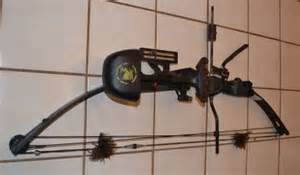
Pic on top left is a Hoyt GamegetterII compound bow-old school,made in the mid 80’s or so.

Right pic is a 55# draw Bear Kodiak Magnum recurve bow,made in mid 70’s

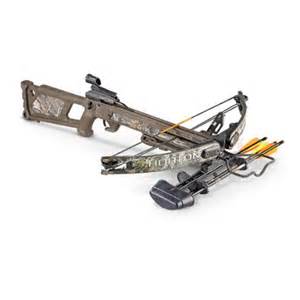
Bottom pic is Horton Summit 150 crossbow-made about 2007 or so-it sucks that Horton went under,at least they were bought by Tenpoint crossbow,another Ohio company.


To get into archery today is expensive-if you buy new bow,quiver,sight/scope,and arrow rest,arrows,etc.

Unless you’ve got a lot of $$$ I would get used stuff,many archery shops sell used bows,pawn shops are another good source,as is the ‘net, and garage sales-if you have the time for that kind of thing.

If you do find a good used bow-of any kind-take it to an archery shop,or a gander Mtn,Bass Pro,Cabela’s etc. and have them put a new string on it for you,put a peep sight in the string,check the bow out to make sure it’s ok mechanically,and check the draw weight if it’s a compound-have them adjust it for you if it’s too easy to draw-or too hard…you’re doing PT every day,so it shouldn’t be too hard to draw,right?

The other thing you need is a target-bales of straw will simply not stop arrows from compound bows,or crossbow bolts.

A black hole,or similar foam target is the best target to use.

The easiest bow to learn to shoot is the crossbow,due to it’s similarity to a rifle. It’s also got the shortest amount of training time to be accurate enough to hunt-or defend yourself and property with.

All you need is the crossbow-bolts-that’s what crossbow arrows are actually called-and some target tips for each bolt. get your target tips in the same weight as your broadheads so when it’s time to shoot the broadheads you won’t have much adjustment to make to your sight/scope.

If you don’t have much arm and upper body strength,you can get a crossbow cocking device,that’s a rope and some pulleys,so it reduces the effort to pull the string back by half.

You shouldn’t need one of these because you ARE doing PT every day,right?

There’s not much maintenance to a crossbow,you’ll need string wax,which you need for any bow-some light machine oil for the cams,and some rail lube,which is generally some type of silicone. The rail is the part where the bolt is placed to load the bow,and where the bolt rides as it’s pushed by the string.

You should be able to hit the target from 10 yards,from there,adjust your pins on your sight,or the windage and elevation on your scope so at 10 yards,your bolts hit about 1 1/2″ high,then move to 20 yards,and using the same pin to aim with,your bolts should hit the bullseye,or very close to it.

I use a rear peep sight on my crossbow,scopes work great,I just prefer the pins,as you can see them for about 10 minutes longer than you can see through a scope in the evening.

Then shoot at 30 yards,using your 2nd pin,which should be placed right under your first pin-if you need your bolts to hit higher,move the pin up,if the need them to hit lower,move the pin down.

Once your are hitting where you should be at 30 yards,adjust your pin so you hit about 1 1/2″ high,then move back and shoot from 40 yards,your arrows should be right on the bullseye.

Put your 3rd pin just below the 2nd one,move back to 50 yards,adjust the pin so you are hitting about 1 1/2″ high.Then move back to 60 yards,and adjust the 3rd pin if you need to.

By sighting in this way-your first pin-the top one,is for shots from 10-20 yards,second pin is for 30-40 yards,and 3rd pin is for 50-60 yards.

Crossbows are accurate well beyond 50 yards,however,I will not shoot a deer beyond 40-50 yards,as there’s just too much chance for error,which could lead to you making a bad shot,and wounding a deer that you are not able to recover.

The compound bow is sighted in pretty much the same way,I only use 3 pins,and I use a peep sight on the string,there are sights available with 5 or even 7 pins,but I feel those are for target shooting only,the 3 pin system is better for hunting,and if need be-self/home defense.

Set your first pin for 10-20,2nd pin from 30-40,and 3rd pin from 40-50.

50 yards is about max hunting range for an older compound,which is what I use,the newer ones can effectively kill deer at 60-70 yards.


Arrows/bolts-when you buy them,don’t get junk. You don’t need top of the line real expensive stuff-get mid price range. The boxes they come in all have charts that tell you what arrow/bolt for what draw weight bow. Get your arrows cut to your draw length-the archery tech will measure your draw length for you-crossbow bolts go by the length that your bow is made for 20″ or 22″.


There are hundreds of different broadheads available for hunting,talk to friends,ask the archery tech,research it online-whatever you want to do-I use 125 grain NAP Thunderheads,they are a 3 blade fixed broadhead,with replaceable blades,and carbide tips-I have never had one not go all the way through a deer,had one go all the way through an elk once too. They work,they have always done the job for me,I see no reason to change.

You will need a broadhead wrench,they are only a few $$$,and it beats slicing the shit out of your fingers putting the broadheads on the arrows with no wrench.


The recurve bow is a whole ‘nother animal,it takes a hell of a lot of practice to become good with one. You can use a peep on the string,and a sight with pins,but many people shoot instinctively,using no sights.

A recurve bow is a good thing to have-for a just in case situation. It is possible to make arrows for a recurve,something that’s just not possible with a crossbow or compound,due to the speeds the bows shoot arrows/bolts at.

I do not believe it’s possible to explain how to shoot a recurve bow,it’s something that you need to learn face to face.


That pretty much covers the basics-at some point,I’ll do a more in depth post,and add some videos to help show how it’s done.


Read.
Learn.

Train.

Do more PT.